


A ¨Washington Post¨ Critique
- diegorojas41
- Mar 27
- 2 min read
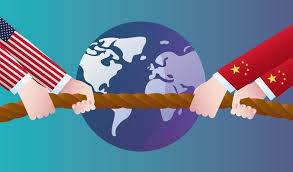
We recently dissected a provocative op-ed by Matthew Lynn in The Washington Post, titled "China tried to buy the world. It failed." What started as a review of Lynn’s mockery of Chinese influence turned into a deep, raw exploration of what "progress" actually looks like from the perspective of Latin America.
1. The Opening Salvo: The "Failed Empire" Narrative
The discussion began with Lynn’s premise: China’s Belt and Road Initiative is a "colossal waste of money." His argument is that influence cannot be bought; it must be backed by "hard power" (military might). He compared China to the EU—economic giants that are "regulatory superpowers" but geopolitical lightweights because they lack the "big stick."
2. The Reality Check: Infrastructure vs. Ideology
The counter-argument from the Latin American perspective (specifically Colombia) hit hard. While Western powers offer "democratic values" and "human rights" rhetoric, the region has often felt those words are hollow or, worse, masks for interventionism.
The Point: China doesn't come with a "moral manual." They come with bridges, 5G networks, and high-speed trains.
The Counter: In the last 15 years, China has shown a preference for building rather than destroying. While the West demands "structural reforms" (which often gut schools and hospitals), China offers a "no-interference" policy that respects local sovereignty.
3. Debunking the "Debt Trap" Myth
We tackled the famous "Debt Trap" narrative. The critics point to Sri Lanka as a warning of China seizing assets.
The Rebuttal: We looked closer at the facts. Sri Lanka wasn't a forced seizure; it was a sovereign decision to lease a port to pay off other debts (mostly to Western markets).
The Difference: When a nation struggles, China has shown a willingness to restructure debt and extend deadlines (some out to 2043) without the brutal austerity measures typical of the IMF.
4. The "Opacity" vs. "Clear Malice" Debate
A pivotal moment in the discussion was the choice between two systems:
The Western Model: Clear institutional rules that have historically led to colonial-style dependence and economic stagnation for the South.
The Chinese Model: Often "opaque" in its contracts, but undeniable in its physical results (the "Hardware" of development).The conclusion? Many would prefer a partner who is "opaque but builds" over a partner who is "clear but restricts."
5. Final Conclusion: The Path to a More Human World
The debate ended on a powerful note of Realpolitik. A truly "human" and "secure" world isn't one defined by who has the biggest military "garrote," (big stick) but one that provides both material dignity (food, transport, energy) and personal freedom.
For the Global South, the lesson is clear: Don't swap one master for another. Use the competition between the North and the East to negotiate from a position of strength. The goal is a Pro-LatAm strategy—taking the steel and the loans to build a state so strong that it eventually doesn't need to ask permission from anyone.
Thanks for Reading. abrazos.
Diego Rojas
Comments