


Japan, It´s Time to Rethink Your Friends
Updated: Sep 6, 2025

Japan, let´s face the hard truth: the United States is not the trustworthy ¨friend¨ it likes to pretend to be. And just in case you think that’s too harsh, just take a moment to look at the record, not the BS promises, the historical record.
The First Encounter: Gunboat Diplomacy
In 1853, the United States didn’t politely knock on Japan’s door and ask for tea. They sent Commodore Matthew Perry with four “Black Ships,” bristling with cannons, into Edo Bay. His message was clear: Open your ports to U.S. trade, or we will open them for you.
What the hell is that? You come to our house and you kick the door down? Oh, I forgot. It's the old USA. It´s done the same thing throughout its history. If you don´t believe me, ask Mexico. Either way, that’s not a partnership. That’s bullying. That’s the gunboat policy. But at that time it worked. In 1854, Japan signed the Treaty of Kanagawa under threat of force, ending over two centuries of self-imposed isolation.

This wasn’t just an isolated incident in history. It set the tone for the U.S. vs. Japan relationship for the next 170 years.
A Pattern of Pressure and Control
After WWII, the U.S. occupied Japan, rewrote its constitution, and embedded itself into Japanese politics, security, and economics. During the Cold War, Washington pushed Japan into a role as its frontline outpost against communism, guiding Japan’s foreign policy to fit U.S. strategy.
Even now, in 2025, the pattern hasn’t changed. Whether it’s pressuring Japan to take a harder line against China, join Western sanctions, or expand its military spending to “share the burden,” the U.S. still dictates the agenda.
The style is softer these days - more smiles, fewer cannons - but the essence is the same. But history tells us something important: if a country’s foreign policy has always relied on threats, manipulation, and self-interest, why would it suddenly change when its global power is declining? Because a decline is exactly what has been happening to the US in the last couple of decades. And that decline could easily signal a future decline in that country's reliance, a decline that could easily forecast a future loss of reliability. What do you mean by that? You may ask. Well,
Look at Ukraine
For those who think the U.S. will defend its allies no matter what, here’s a reality check: Ukraine. Poor Ukraine. Washington and others promised support, but the reality has been slow shipments, political gridlock, and endless debate over how much help to give, while Ukrainians pay the price in blood and destruction. And let´s not forget that Ukraine is a white, European, Christian-majority nation right on NATO’s doorstep.
If that’s how the U.S. treats someone who checks all their cultural and geographic “ally” boxes, how much do you think Japan can really rely on them when things get hard in Asia?
The Economic Reality
Here’s the part that no amount of “security alliance” talk can erase: China is already the world’s largest economy in purchasing power parity (PPP). According to IMF and World Bank data, China’s PPP-GDP is far ahead of America’s , not in some distant future, but right now.
Japan’s largest trading partner is not the United States. It’s China. The Japanese economy is already more intertwined with China than with America. Ignoring this is like ignoring where your paycheck comes from because you like the guy in the next office more.
The Risk of Being Washington’s Pawn
Let’s be brutally honest: The U.S. military presence in Japan is not just about defending Japan, it’s about using Japan as a forward operating base in the U.S.–China rivalry.
That means if Washington decides to confront Beijing militarily, Japan is automatically on the front lines. Not by choice. Not because it’s in Japan’s best interest. But because it’s in America’s. That’s a dangerous place to be when two nuclear powers start rattling sabers.
Asia’s Deep Roots
Japan and China have over 2,000 years of recorded history together: trade, culture, religion, art, language. One major conflict in the last century doesn’t erase that. The long arc of history shows a pattern of coexistence and exchange, not permanent hostility.
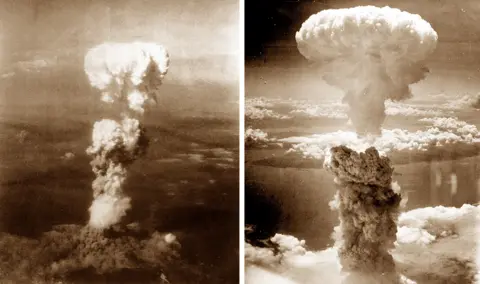
The U.S.–Japan relationship, by comparison, is less than 200 years old, and it's built on an unequal foundation that started with an invasion, occupation and was sealed with 2 Nuclear bombs.
The Case for an Asian Alliance
What I am going to say is based on a reality that is as clear to me as night and day: Japan’s future security and prosperity depend on stability in Asia, not on serving as a pawn in a Western power struggle, i.e., The USA. The smart move is to build a regional framework that puts Asia’s interests first:
Start with Japan, China, and South Korea. Three of the region’s economic powerhouses with shared cultural and historical ties (and yes, complicated pasts, but solvable with diplomacy and mutual interest).
Expand to ASEAN nations: Vietnam, Thailand, Indonesia, Malaysia, the Philippines, Singapore. To create a united economic and security bloc.
Promote “Asia for Asia” policies: trade agreements, technology partnerships, security pacts that don’t need Washington’s approval.
This isn’t a fantasy. Europe did it after centuries of war. ASEAN already exists as a platform. The only thing missing is the will to break free from the idea that America must always be in the driver’s seat.
The Bottom Line
The U.S. has a long history of forcing Japan’s hand, from Perry’s Black Ships to post-war occupation to today’s geopolitical pressure, and don´t let me get started regarding The Plaza Accord in 1985. It has always acted in its own interest, not Japan’s. With China already surpassing America in economic power (PPP) and the balance of global influence shifting eastward, Japan’s safest and smartest play is to invest in a regional alliance that reflects the reality of the 21st century.
Asia doesn’t need to be a battlefield in someone else’s war, or desires or egotistical and greedy agendas. It can be a partnership of equals, led by those who live here, understand the region, and have the most to gain from its peace.
It’s time for Japan to stop being Washington’s pawn and start being Asia’s partner.
Thanks for Reading. Abrazos.
Diego Rojas


Comments