


A $20,000 Flying Lawnmower
- diegorojas41
- Apr 11
- 2 min read
Why the War Industry is Losing the Math
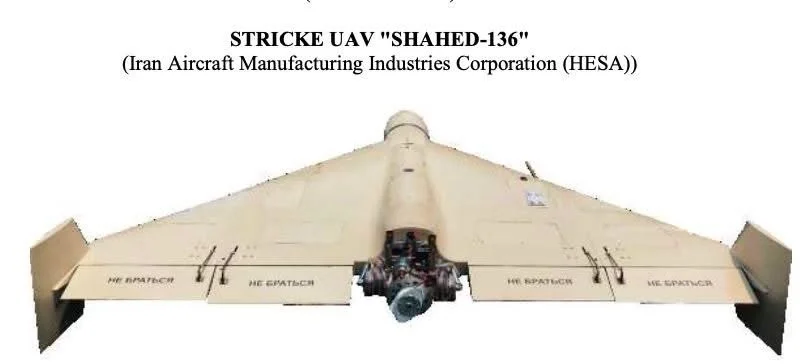
In a Red Sea skirmish last week, a $2 billion Aegis destroyer fired a $2 million Standard Missile-2 to intercept a "threat." The threat? A Shahed-series drone - a frame of fiberglass and a lawnmower engine - costing less than $20,000.
The missile won the engagement. The superpower took another step toward strategic bankruptcy.
1. Destruction is Not a Strategy
For decades, the defense industry sold a dream: "Exquisite Scarcity." We built a few, incredibly expensive, "invincible" platforms - aircraft carriers, stealth jets, and $1 billion radar arrays (like the AN/TPY-2).
But in 2026, we are learning the hard way that destruction is easy; winning is expensive. You can level a city, but if a $20,000 drone can disable a $1 billion radar system (as Iran recently demonstrated), you haven't "won." You’ve just proven that your expensive shield is made of glass.
2. The Death of "Steel Rain"
We are seeing the transition from "Steel Rain" (massed, expensive firepower) to "Intelligent Mass."
The Old Math: Spend $4 million on a Patriot interceptor to stop a missile.
The New Math: Your opponent launches a swarm of 50 drones. Total cost to them? $1 million. Total cost to you to stop them? $200 million.
The military-industrial complex is currently optimized for a world that no longer exists. They are built to sell "Exquisite" tools to a world that has moved on to "Acceptable Attrition." They are selling $3.8 million T-90M tanks that are being shredded by $1,200 FPV drones. A cost ratio of 3,200 to one.
3. The "Hedgehog" Reality
How do you deal with a world where a "Sub Sea Baby" UUV costing tens of thousands can sink a $400 million submarine?
The defense giants are scrambling. They are trying to pivot to "Hybrid Fleets" and "Distributed Operational Concepts," but their business model depends on massive government contracts for singular, expensive items. They don't know how to make money on $500 drones. They only know how to make money on $500 million jets.
The Bottom Line
The war industry is currently "winning" the budget battle while losing the technological war. $1.5 trillion in America alone. They are drowning in megabillions of government spending to produce equipment that is increasingly irrelevant on a battlefield defined by cheap, autonomous, and disposable swarms.
Superiority is no longer measured by how complex your machine is. It’s measured by how much it costs you to lose it.
Until the industry accepts that the era of "Invincible Tech" is over, they’re just building a very expensive funeral for the old way of war.
Thanks for reading. Abrazos.
Diego Rojas


Comments